

Rambo, RoboCop, the Terminator, and Polaroid… what do they all have in common? They are undisputed heroes of the 1980s-1990s. Like these iconic characters, the instant print in a frame was an inseparable symbol of those years: a symbol of coolness, technological progress, and a little bit of everyday magic. Not long ago, Polaroid released its first new instant camera in more than ten years (a Fuji Instax clone camera). It is a kind of “back to the future,” or Star Wars with its jumbled episodes, and as a new camera, it is a continuation of the iconic 1970s model - the Polaroid One Step. So, meet the Polaroid One Step 2!
Design and functional elements
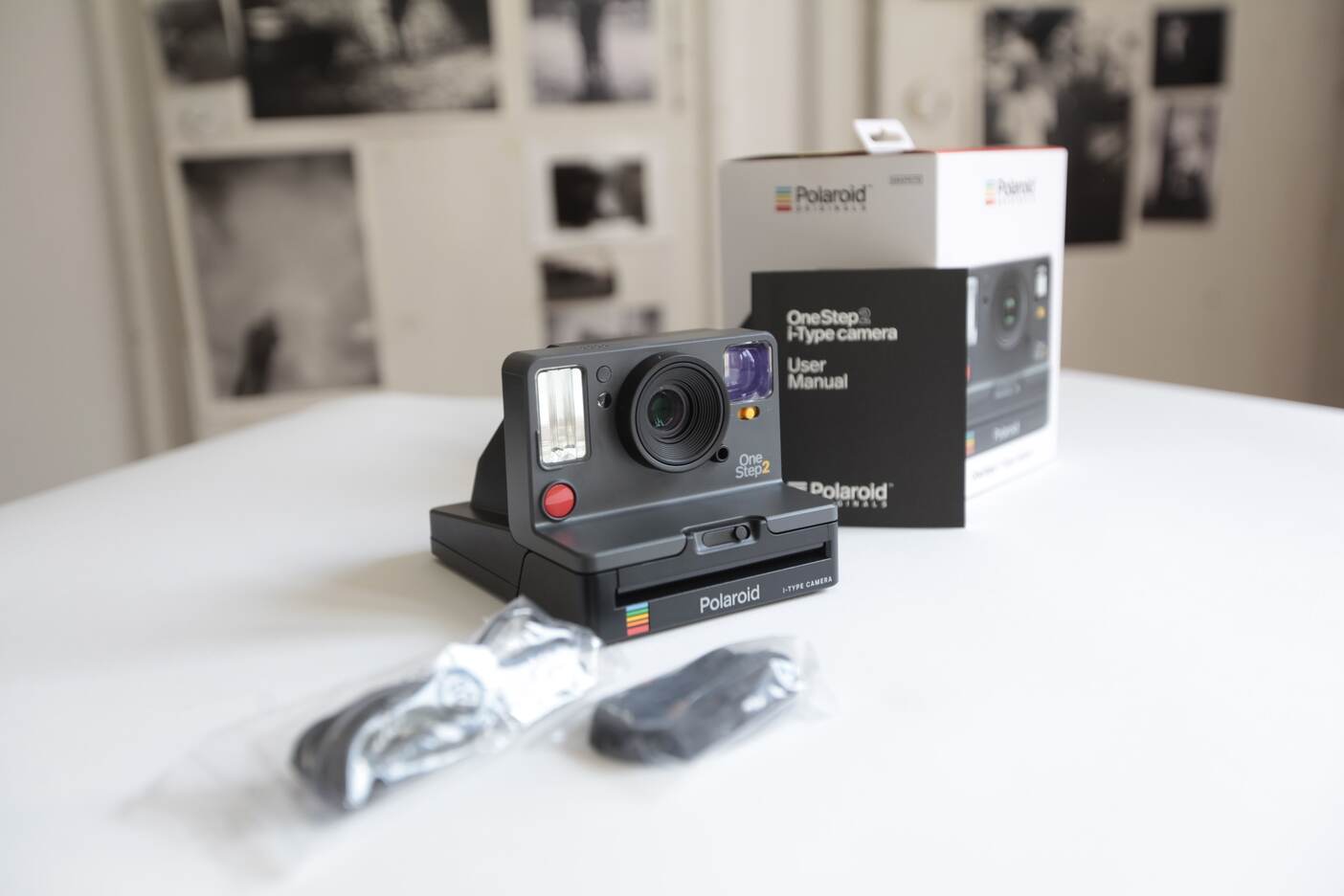
We take it out of the box… Wow! The first impression is that it's cool! Of course, not everyone will like the angular design of the late '70s, but fortunately, I'm not one of them. At first glance, the camera looks identical to the old OneStep, except, of course, for the flash. But when you pick up the camera, you can see that there are a few differences after all.
So, the first thing that catches your eye and is slightly confusing is the viewfinder. Unlike the original model, it is practically nonexistent here - that is, it lacks its familiar extension, the protruding eyepiece. We'll find out in the field whether this is an advantage or a drawback.

The second noticeable change is the flash. Everything is clear here: the flash was what older cameras like the SX70 lacked most. The OneStep 2 has one, so everything is great. On the front, we notice a small self-timer button, which is great and never unnecessary. On the back are the camera power button, flash-off button, and USB charging port. Oh, I forgot to mention that the camera's biggest difference is that it works with new I-Type film packs. They're cheaper because they don't have a battery. That's why the camera has a power button and a charging cable port. If you happen to have a large supply of 600-type film packs at home, don't worry - the camera works perfectly with them too (it only doesn't work with SX70-type film packs).
Controls
After charging the camera (it comes from the factory only half-charged), I inserted a film pack and headed into the city. When packing the camera into my backpack, I liked the absence of the long viewfinder - the shape was smoother and there were fewer protrusions. That day, I was meeting some friends I hadn't seen in a long time, and I dedicated my first precious shot to them :) When they were taking selfies in front of a wall, I walked over and, saying, “Wait, I'll take a photo of you with this awesome camera,” took a shot. Ah, the red button is cool! It inspires such childlike excitement: you press one big, bright button, and you have a photograph in your hands! The girls were thrilled too: both with the camera and with the process of developing the photos.

When taking a photo, the flash always fires: both in the dark and on a sunny beach. If you want to take a photo without the flash, you need to hold down a small button on the back. The photo came out slightly overexposed, but in my opinion, practically every instant camera suffers from this. As far as I am concerned, it is better not to turn off the flash in bright sunlight, as it can brighten deep shadows. Just set the exposure compensation toward minus. There is no need to focus; hyperfocal focusing is set, so everything from 60 cm to infinity will be more or less in focus. To better judge the distance, keep in mind that 60 cm is approximately the length of an outstretched arm. While shooting, I also realized that the lack of a long viewfinder eyepiece is still a drawback, especially for people who aim with their left eye.
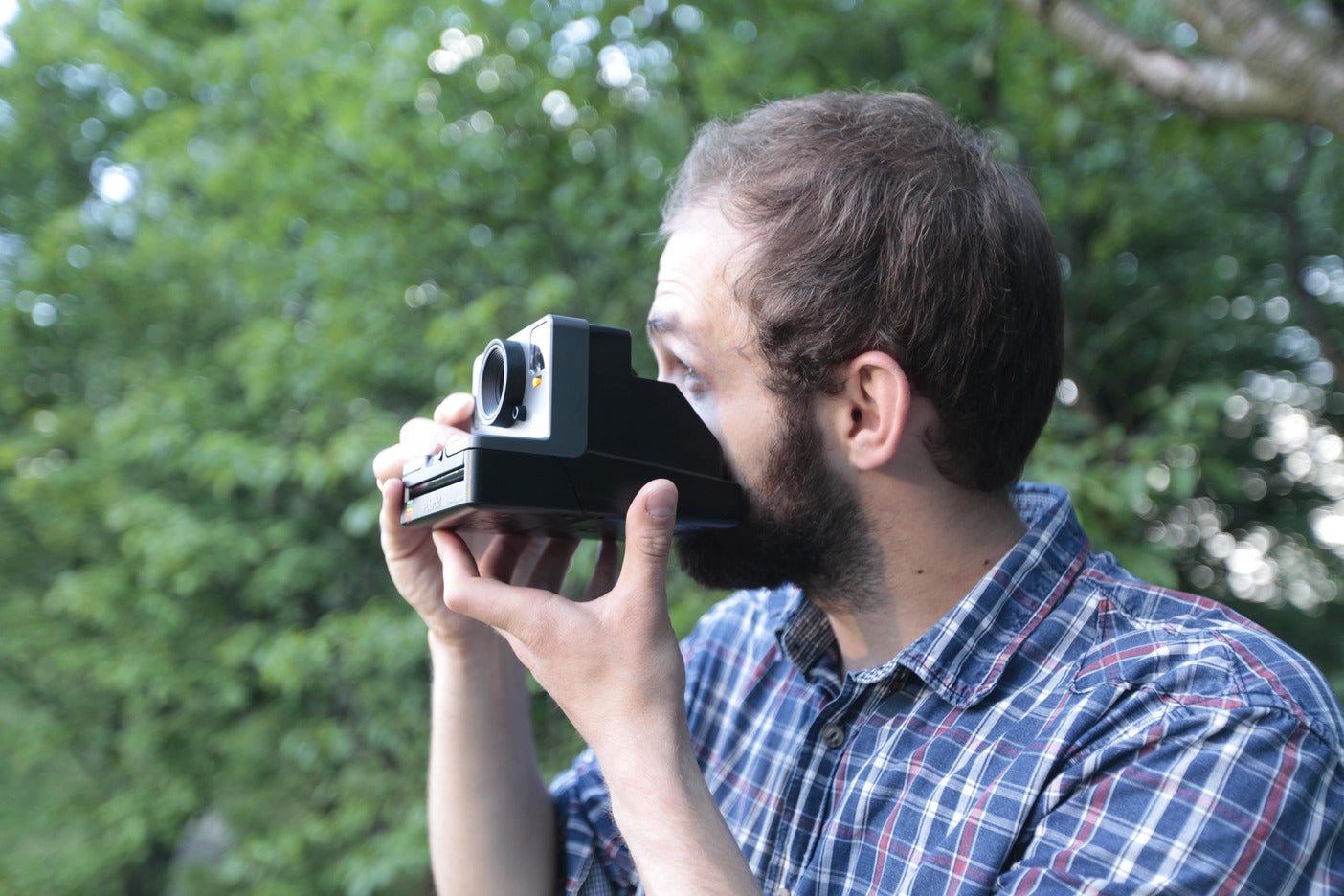
It was extremely uncomfortable for me to squint with my left eye just to see the composition somehow. It is also not very comfortable even for right-handed people, because you will instinctively raise the camera at an angle to see better, thereby shifting the composition upward. This is certainly not fatal, but it is not ideal either.

Photographs
A shot with the sky. This was a difficult task for such a simple camera, but in my opinion, it turned out great. Quite decent contrast, incredible color. Perhaps it would have been more saturated with negative exposure compensation, but I am completely satisfied with the shot as it is.

Hnat Khotkevych Palace of Culture. Here I tried to take a kind of “California-style photo.” An old sign, a brick building, a sunny sky. This shot was already taken with exposure compensation toward minus, and I really like it. A sort of 1970s Brooklyn.

That day, I also had the original One Step camera (Polaroid 1000) with me.

In one of Lviv's courtyards, I took two identical shots. Both cameras did a good job. What surprised me was that the shot from the new One Step 2 looked more retro than the one from the original 1970s camera.

On the left, a shot taken with the original One Step; on the right, with the One Step 2
As evening approached, my wife and I went to watch the sunset at Kaiserwald (a large park in Lviv). On the way, I tried to recreate an old shot that I had taken a few years earlier in the same place, with the Fuji Instax 300.

On the left, a shot taken with the Fuji Instax 300; on the right, with the One Step 2
I understand that this is not entirely a fair comparison of the shots, since they were taken at different times, but the shooting conditions were very, very similar. Unfortunately, I did not really like the Polaroid shot. The exposure meter made a mistake in such difficult conditions, and the shot turned out worse than the Instax one. At that moment, I really liked the frame counter: it displayed the number of shots I had left in a fun way.

Counter
The light in the park was beautiful, and I wanted to photograph the two of us. I placed the camera among the branches, pressed the self-timer button, and then the red shutter button itself.

The photograph turned out well, everything is in focus, but I composed the shot a little poorly, so it is somewhat crooked. But I am satisfied, especially because now you can easily photograph yourself and your friend with a Polaroid in an empty park, without anyone's help. That genuinely pleased me.
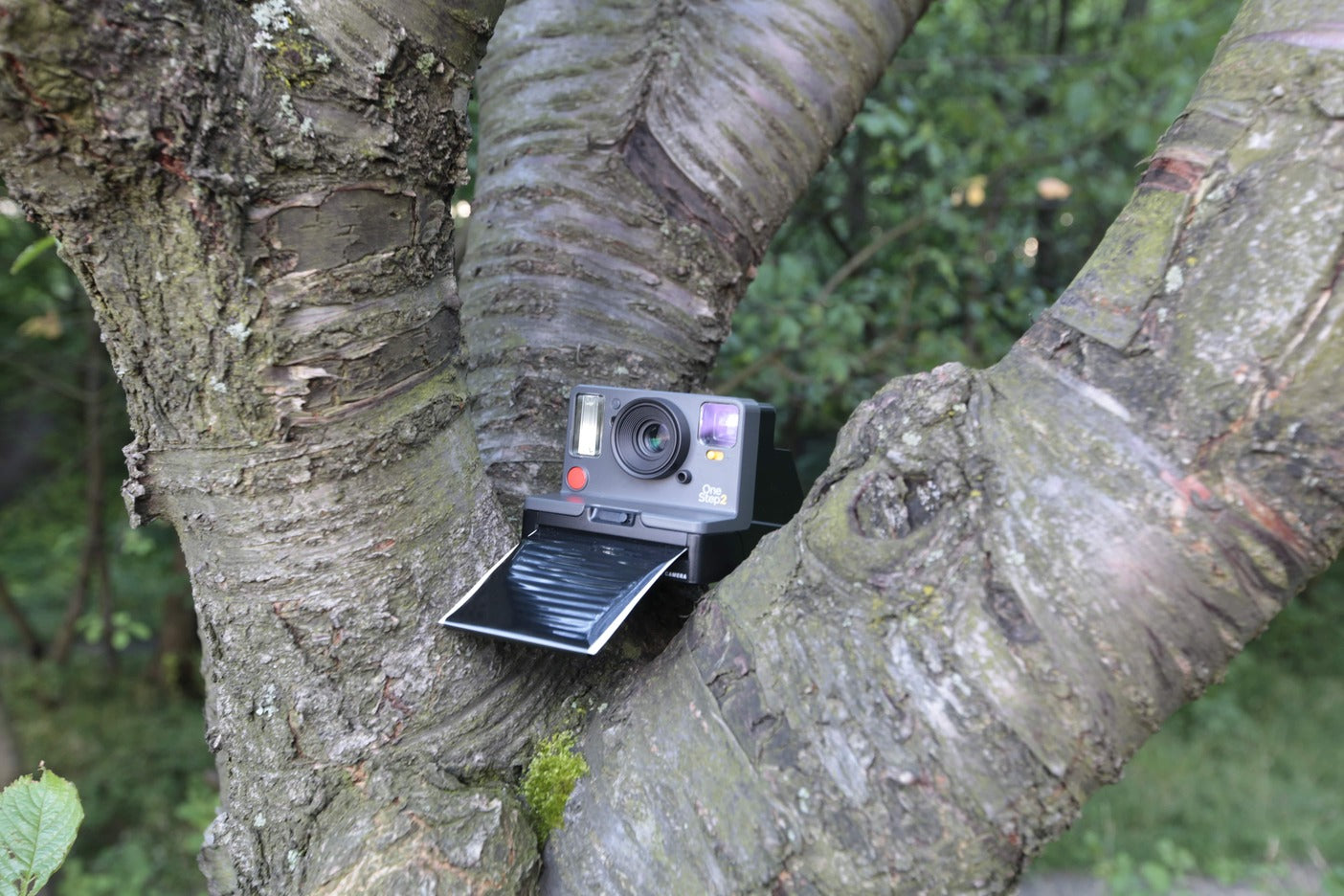
When I tried to take the next shot, something strange happened. It simply did not come out. After waiting a few minutes, I tried to take another shot, and it started coming out but got stuck. This really scared me. After several more attempts to take a picture, I finally decided to open the door through which the photographs come out. As soon as I began opening it, the camera spit out the photograph. Seeing that the next shot had already been pushed out slightly too, I carefully pushed it back in and tried taking a photograph again. This was a glitch caused by a manufacturing defect that, unfortunately, occurs very rarely but does happen. I don't take it to heart, as they say, sh*t happens! :) Fortunately, everything worked properly in the next shot: the exposure was good and the focus was sharp. This time I also set the exposure compensation to minus. A few small light leaks got onto the photograph when I opened the door, but even they don't bother me.

Also, from my purely subjective point of view, one of the camera's drawbacks is that the flash-off button is located in a rather inconvenient place. To press both buttons at the same time, you have to twist your fingers slightly.

Also, while shooting, your fingers often get in the way of part of the flash, which of course is not a major problem but can slightly affect the photograph itself.

Overall, my impression of the camera is good. It feels nice in the hands, and I like the absence of various moving parts found on older 600-series cameras, such as the famous 636. The photo quality is also quite good, although the image is probably not as sharp as on wide-format Fujifilm cameras. For people who are happy with their 600-series Polaroid cameras, this camera will be a serious step forward. It has a powerful flash, supports new I-Type film packs, includes a self-timer, and generally offers slightly better image quality.

So, if you love your old 90s Polaroid but would still like something new with the character of the famous cameras, the One Step 2 would be the right choice. Also, if you are looking for your first party camera and want it to be a real Polaroid with its iconic square frame, then this is definitely a good choice as well. With this camera, you are guaranteed attention. You will definitely get good shots without much effort. But if you are an experienced photographer and want to develop your skills and get high-quality instant photographs, then this camera is not for you. You'd better save up for an SLR SX-70 or SLR 680. And if, like me, you are left-handed, then this camera is not for you either :)